Boilers Don't Break Down in August — That's Precisely the Point
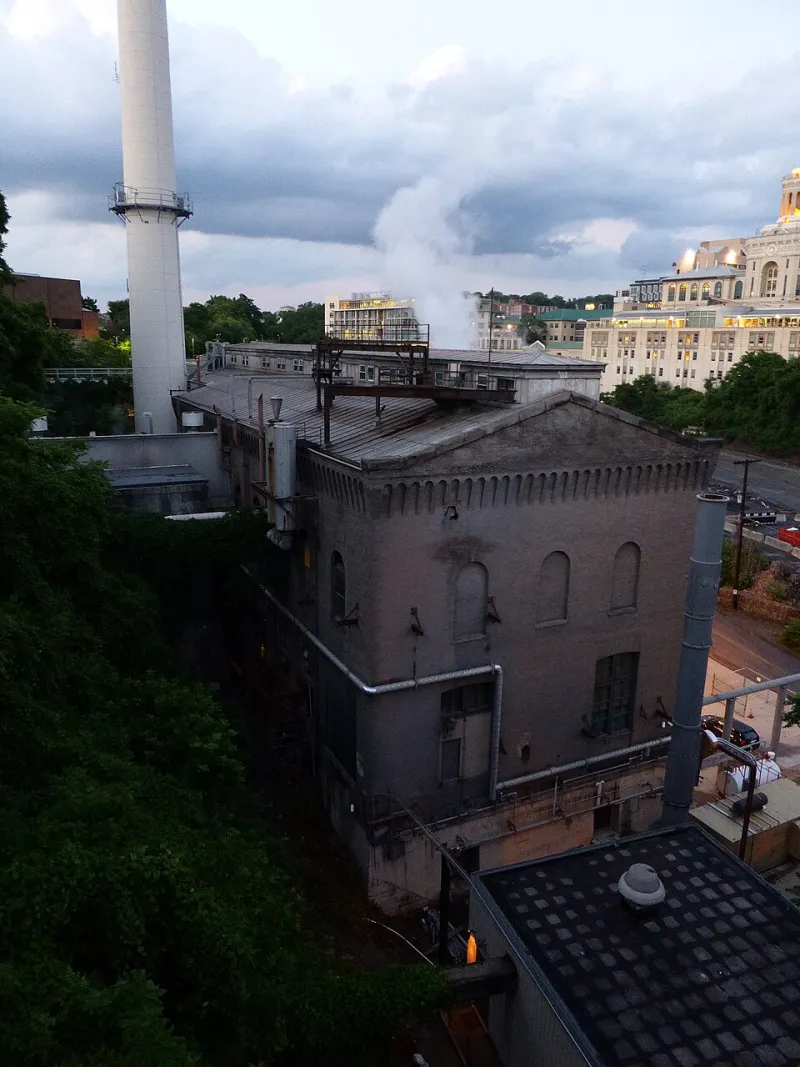
Photo: MartinThoma, CC0, via Wikimedia Commons
There is a peculiar rhythm to the commercial building calendar that anyone who has managed a portfolio for long enough comes to know intimately. From October to March, the phone rings. From April to June, quotes get approved. And in July, nothing much happens — which is exactly why those weeks are the most valuable in the entire year.
We spend a good deal of our time attending emergency call-outs, and the pattern is depressingly consistent: the failures that bring a building to its knees in January were almost always visible in July, when there was still time to do something about them without a tenant standing in the plant room asking when the heating will be back on.
The Tenant Problem
The fundamental obstacle to proper plant maintenance is occupancy. A boiler serving a multi-let office block cannot simply be stripped down for a full descale and burner overhaul while two hundred people are working under its distribution network. Isolating the heating circuit in February is not maintenance; it is a complaint-generating exercise with a potential rent dispute attached.
Summer changes the calculus entirely. With occupancy at its annual low — annual leave, school holidays, the traditional August exodus — a three-day shutdown that would be unthinkable in winter becomes a routine entry in the facilities diary. Lifting the door interlock on the boiler house, draining down sections of the low-loss header, replacing tired motorised valves: all of it can happen without a single ticket raised.
What July Is Actually For
The quiet weeks are not merely an absence of problems. They are the only window in which the following become practical:
- Strip-down boiler servicing — full removal of burners, cleaning of heat exchangers, replacement of door ropes and gaskets. An annual gas safety check keeps you compliant; a summer strip-down keeps you running.
- BMS schedule rationalisation — we routinely find heating circuits still running on time-and-temperature settings written for a building's occupancy five years ago. Rewriting frost protection setpoints, optimum start parameters and holiday overrides takes hours in July and saves thousands across the heating season.
- Access and licences — scaffolding to a flue, a crane pad for a replacement AHU section, landlord licences for out-of-hours works. Every one of these takes weeks to arrange with tenants in situ and nobody chasing them in August.
- Water treatment and dosing — flushing, inhibitor checks and pressurisation unit servicing are far simpler on a warm, drained-down system than on a live one.
The Economics of Booking Early
There is a second reason to act now, and it is financial. Mechanical contractors' diaries follow the same rhythm as everyone else's: summer is planned works season, and the good firms are booked six to eight weeks ahead. Leave your enquiry until September and you face a choice between the premium rates of reactive work, or the contractor who had a gap because nobody reputable wanted them.
The arithmetic rarely favours delay. A planned summer boiler overhaul might cost £2,000–£4,000 depending on plant size. An emergency January call-out — with out-of-hours labour, parts couriered at short notice and, in the worst cases, temporary heating hire — routinely runs to five figures before the repair is even complete. Add the soft costs of a cold building: reduced productivity, unhappy tenants, and in retail or hospitality settings, lost revenue that no insurance policy will touch.
A Practical Timeline
If you are reading this in high summer, the sequence is straightforward. Book the strip-down now, for the next three to four weeks. Use the same visit to commission a full BMS review — it requires no shutdown and pays for itself repeatedly. Negotiate any access agreements while tenants are thin on the ground. And before the clocks change, have your frost protection strategy formally tested, not merely assumed.
The Unfashionable Truth
Facilities management rewards the unglamorous. Nobody celebrates the boiler that didn't break down, and there is no kudos in a BMS schedule quietly saving 12% on gas consumption. But the buildings that sail through winter without drama are not lucky. They are the ones whose managers used the quiet weeks properly.
The paradox of the summer shutdown is that the best time to fix winter's problems is when heating is the last thing on anyone's mind. Your future self — standing in a warm plant room in December, phone silent — will be quietly grateful.