The Retrofit Clock Is Ticking: What MEES, BREEAM and 2030 Mean for Your Commercial Portfolio
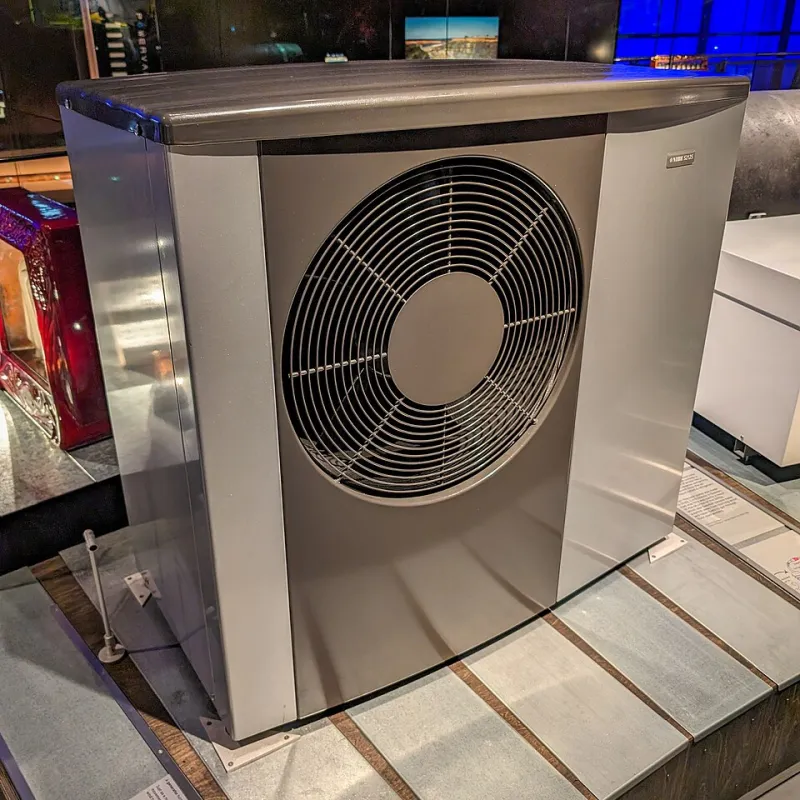
Photo: The wub, CC BY-SA 4.0, via Wikimedia Commons
Ask any commercial property solicitor about 2030 and you will get the same answer: that is when the government's consultation trajectory for Minimum Energy Efficiency Standards points towards privately rented commercial buildings needing an EPC rating of B or above. For portfolios still sitting on C and D-rated stock with plant that predates the millennium, the arithmetic is unforgiving. A retrofit of that scale does not happen in a year. It happens over three to five, once surveys, design, planning consents and tenant negotiations are accounted for.
The message we give every landlord who engages us is straightforward: the cheapest retrofit is the one you started early.
Why the EPC Deadline Reshapes Everything
It is tempting to treat energy ratings as a paperwork exercise. They are not. An EPC rating is now a condition of letting. Failing to meet the standard means a property cannot lawfully be leased, which converts an underperforming building into a stranded asset with a valuation to match.
Since April 2023, it has been unlawful to let commercial premises with an EPC rating of F or G. The trajectory towards B by 2030 has not been formally enacted, but lenders, insurers and institutional investors are pricing it in regardless. Several high street banks now ask for net zero transition plans before agreeing to refinance commercial property debt.
In practice, this means the decision to upgrade heating and ventilation plant is no longer discretionary. The only real question is which route delivers compliance at a defensible cost.
Heat Pumps: The Workhorse of the Commercial Retrofit
For most office, retail and light industrial stock, air source heat pumps (ASHPs) are the backbone of a decarbonisation strategy. Replacing a gas-fired boiler with a well-specified ASHP can cut a building's operational carbon by 50-70%, depending on the electricity mix and the efficiency of the distribution system it serves.
The engineering detail matters enormously, however. Heat pumps operate most efficiently at lower flow temperatures, typically 45-55°C rather than the 70-80°C that legacy radiator circuits were designed around. Retrofitting therefore often involves a combination of:
- Upsized emitters — larger radiators or fan coil units to deliver comfort at lower water temperatures
- Improved fabric first — insulation and glazing upgrades that reduce the heating load before the plant is sized
- Buffer vessels and weather compensation controls to prevent short cycling and protect compressor longevity
A poorly executed swap — dropping a heat pump onto a system designed for a boiler — is the single most common failure we are asked to remedy. It delivers disappointing seasonal efficiency, higher running costs than the client expected, and a maintenance headache that undermines the business case.
Ground source systems remain an option for larger campuses and sites with available land, offering higher and more stable efficiencies, but the capital cost and disruption of borehole drilling generally confines them to new-build or major refurbishment schemes.
The Overlooked Half of the Equation: Controls and BMS
Hardware grabs the headlines, but a disproportionate share of energy waste in commercial buildings comes from controls that nobody has looked at in a decade. We routinely encounter building management systems running on inherited schedules — heating a half-empty office block through a bank holiday weekend because a timeclock was set in 2011 and never revisited.
A modern, open-protocol BMS with occupancy sensing, demand-led ventilation and remote analytics typically delivers 15-30% energy savings on its own, often for a fraction of the cost of plant replacement. When layered onto a heat pump installation, intelligent controls are what convert a compliant building into a genuinely efficient one.
For landlords with multi-let portfolios, metering at sub-circuit level also enables recharge structures that pass realistic energy costs to occupiers — a quiet but meaningful lever on both net operating income and tenant behaviour.
BREEAM, ESG and the Investor Lens
Beyond statutory minimums, BREEAM In-Use certification has become the de facto benchmark for institutional-grade commercial stock. Heating and hot water systems contribute directly to the energy category, and credits are available for low-carbon plant, energy monitoring and commissioning evidence.
Occupiers are following the money. Corporate tenants with their own net zero commitments increasingly filter their searches by EPC and BREEAM credentials, and green lease clauses are becoming standard in prime city schemes. A retrofitted building is not merely a compliant building; it is a more lettable one, with shorter void periods and stronger rental tone.
What Does the Payback Look Like?
Honest numbers, with the caveats that site conditions dominate:
- ASHP replacement of a mid-sized office boiler system: typically £25,000-£80,000 installed, with payback of 7-12 years against a like-for-like gas baseline, improving further where the old plant was near end of life
- BMS upgrade and optimisation: £10,000-£40,000 for a mid-sized building, frequently paying back inside three years
- Combined fabric and services retrofit targeting EPC B: highly variable, commonly £40-£90 per square foot, best phased alongside planned refurbishment or lease events
Business Rate relief on eligible plant, capital allowances and, in some regions, local authority decarbonisation grant funding all soften the net cost. Structuring the works across a capital programme rather than as a single spend also keeps individual years manageable.
Start With a Survey, Not a Sales Pitch
The portfolios that will meet 2030 comfortably are the ones conducting detailed condition and energy surveys now, sequencing works around lease expiries and refurbishment cycles, and engaging mechanical contractors early enough to influence design rather than merely price it.
At Big Building & Mechanical, we have spent years delivering heating, ventilation and controls upgrades across commercial stock of every vintage. If your portfolio has buildings rated C or below, the most valuable meeting you can schedule this quarter is a retrofit feasibility review. The deadline is fixed. The cost of ignoring it is not.