Six Weeks of Silence: Making the Most of the Summer Lull in Your Commercial Building
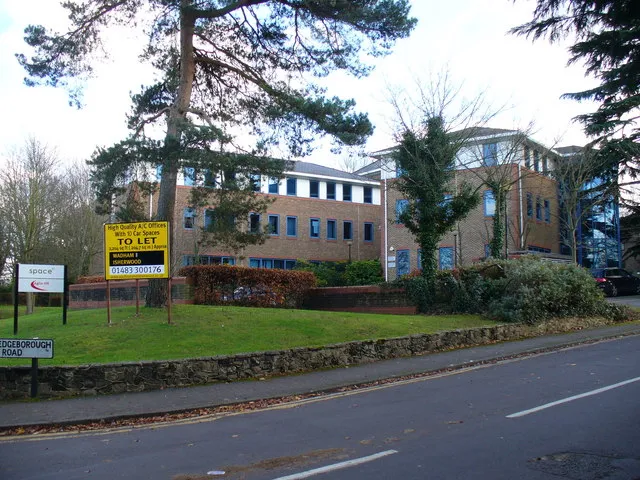
Photo: Colin Smith, CC BY-SA 2.0, via Wikimedia Commons
The Quietest Weeks Are the Busiest for Us
Every July, our service desks see a pattern repeat itself across the UK commercial portfolio. Occupancy drops, meeting rooms fall silent, and facilities managers — briefly liberated from the daily firefighting of term-time operations — turn their attention to the works that have been sitting on the schedule since February.
It is no accident. Deep cleaning of ventilation systems, L8 compliance flushing and tank work, valve overhauls, AHU strip-downs and plant replacements all share one requirement: access. And access, in a multi-let office building in Manchester or a business park outside Slough, is almost entirely a function of how many people are in the way.
The summer lull is not a holiday from building management. Handled properly, it is the most productive stretch of the operational year.
What Belongs in the Window
Not every job earns its place in the summer shutdown. The works that genuinely justify the planning effort tend to fall into four camps:
Legionella and water hygiene works. L8 compliance tasks that require draining systems, replacing tank jackets or refurbishing calorifiers are disruptive by nature. Scheduling them when the building is half-empty transforms a tenant relations problem into a routine job.
Deep cleaning of ventilation and ductwork. Post-pandemic, tenants scrutinise indoor air quality more closely than ever. Duct cleaning and coil cleaning are far easier to complete — and to photograph for the compliance file — when floor plates are quiet.
Valve and actuator overhauls. Isolating valves that have not moved since the last decade of the last century have a habit of failing at the worst possible moment. Summer is the time to exercise, repack or replace them, before the heating season tests them for you.
Plant replacement. Swapping an AHU or reconfiguring a plant room needs crane access, road closures and quiet corridors. School holidays and reduced occupancy make all three easier to negotiate with landlords, councils and tenants alike.
A Week-by-Week Planning Template
We encourage clients to work backwards from early September, when normal occupancy returns. A practical six-week framework looks like this:
- Weeks 1–2 (mid-June): Confirm scope, lock in contractors, issue tenant notifications and book crane or road permits. Any statutory approvals — however minor — should be in hand by now.
- Week 3 (early July): Isolations and drain-downs. Water hygiene works and tank cleaning first, while the weather is warm and drying times are short.
- Week 4: Ductwork and AHU deep cleaning. This is the labour-intensive week; resource it generously.
- Week 5: Mechanical works — valve overhauls, actuator replacements, controls upgrades, minor plant swaps.
- Week 6 (mid-August): Refill, flush, commission, witness and document. Leave a deliberate buffer: something always overruns.
The template flexes for every building, but the principle does not: front-load the paperwork, back-load the buffer.
The Economics of Out-of-Hours Scheduling
There is a persistent assumption that out-of-hours or holiday-period working carries a heavy premium. In practice, the arithmetic usually favours the summer window. Day-rate premiums for weekend or evening working typically add 15–30% to labour costs — but the avoided costs of in-hours working routinely dwarf that figure.
Consider a full AHU replacement on a five-storey office building. In-hours, the works require phased floor closures, temporary ventilation, decanting costs and a fortnight of tenant complaints. Out-of-hours across the summer lull, the same job might complete in nine nights with no decanting at all. On recent projects we have seen total project costs fall by a fifth or more once disruption, overtime claims and compensation are counted.
There is also the compliance dividend. Works completed and witnessed in August appear in the logbook well before the winter audit cycle, rather than joining the October queue when every contractor in the region is fully booked and day rates firm up accordingly.
When the Window Closes: Cautionary Tales
We keep a mental file of the ones that left it too late.
One London landlord deferred a chilled water valve replacement from August to October on cost grounds. The valve seized during the first cold snap, leaving half the building without heating for eleven days in December. The emergency repair — including out-of-hours labour, temporary heaters and a very unhappy anchor tenant — cost roughly four times the original quotation.
In another case, a facilities team in Leeds pushed duct cleaning into September to coincide with a budget cycle. By then, the specialist contractor's lead time had stretched to six weeks, and the works slipped into the heating season, when isolating the system was no longer viable. The job eventually completed in April — ten months after it was first identified.
The pattern is consistent: the summer window rewards the organised and penalises everyone else, usually at the moment of maximum inconvenience.
Start the Conversation Now
If your summer programme is not already scoped, costed and notified, you are not early. But you are not necessarily late either — provided the conversation starts in the next few weeks. Walk the plant room, review the defect log, talk to your tenants about holiday patterns, and build the plan around the access you will actually have.
The quiet weeks are coming regardless. The only question is whether your building uses them.