The Fixture That Isn't Yours: Untangling Fan Coil Ownership Before Lease Expiry Does It for You
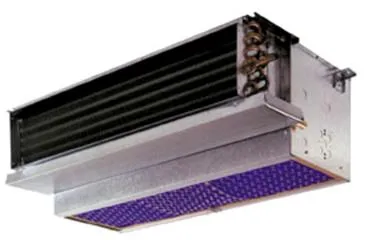
Photo: Rporter8555, Public domain, via Wikimedia Commons
A Quiet Unit in a Croydon Ceiling
Walk into the third-floor office of the Croydon business park in question and you will notice very little. Carpet tiles, a kitchenette, and above the ceiling grid, eleven fan coil units humming away — installed at the tenant's expense five years ago as part of a £180,000 fit-out that transformed a shell-and-core floor into a functioning headquarters.
Nobody argued about them at installation. Everybody argued about them at lease expiry.
The tenant's position was simple: we bought them, we maintain them, we will remove them. The landlord's position was equally simple: they service the building's fresh air strategy, they are connected to risers we own, and their removal would leave voids in the ceiling and gaps in the ventilation the next occupier would inherit. The dilapidations claim that followed ran to six figures and, remarkably, the fan coil units themselves were the cheapest line item in it.
The Law Is Less Helpful Than You'd Hope
The distinction between a fixture and a fitting — the legal fulcrum of this entire argument — turns on two tests: the degree of annexation and the intention of the parties. A fan coil unit bolted into a ceiling grid, connected to ductwork and wired into a controls system that spans multiple tenancies, is annexed to a degree that most surveyors would call a fixture. The tenant's intention at installation, however, was never documented.
That silence is where disputes live. In multi-let buildings the complication compounds: a fan coil unit serving one floor may draw chilled water from a landlord riser, discharge condensate into a landlord drainage run, and report to a BMS the landlord maintains under the service charge. Removing it is not like taking away a photocopier.
The result, seen repeatedly across our maintenance contracts, is that tenant-installed mechanical equipment drifts by default into landlord ownership — and with it, landlord liability for maintenance, replacement and eventual compliance, including F-Gas obligations on any associated refrigerant circuits and the water hygiene implications of poorly drained condensate trays.
Four Questions to Ask Before Any Unit Goes In
The remedy costs nothing but a paragraph in the licence to alter. Before a tenant installs so much as a single FCU, the parties should agree and record:
- Ownership at expiry. Does the unit stay and become part of the landlord's installation — and if so, at what condition, and with what compensation?
- Removal rights and reinstatement standard. If the tenant may remove it, what does 'making good' mean? A plastered and decorated ceiling, or a ceiling grid and good luck?
- Maintenance responsibility in the interim. Who services the unit, who pays for it, and does it fall inside or outside the service charge?
- Access and isolation. Can the landlord's team reach the unit for statutory checks — and is the electrical and water isolation documented?
The Croydon dispute would have been a five-minute conversation had those four points been settled in 2019. Instead, they were settled by solicitors in 2024.
The Service Charge Shadow
There is a second, quieter cost. When ownership is ambiguous, so is service charge treatment. Tenants resist paying into a sinking fund for plant they believe they own; landlords resist maintaining plant they believe the tenant owns. Units fall between the two — serviced sporadically, cleaned rarely, and inspected never. A fan coil unit with a neglected condensate tray is not merely inefficient; it is a water hygiene risk and, in the worst cases, a source of the very indoor air quality complaints that trigger occupier audits.
We have opened access panels on tenant-installed units that had not been touched in four years. The dust mats, the microbial growth, the corroded fins — none of it appears on any dilapidations schedule, and all of it appears in the next tenant's energy bills.
Write It Down While Everyone Is Still Friendly
Fixture ownership is one of those subjects that never seems urgent until it is the only subject that matters. The practical advice is unglamorous: amend the standard licence to alter template, require a mechanical assets schedule with every fit-out submission, and photograph and record every installed unit — make, model, serial, service history — at practical completion.
Two thousand pounds of fan coil unit is not worth a legal dispute. But the ductwork, the controls integration, the riser connections and the ceiling reinstatement around it absolutely are. Define the ownership before the crane arrives. After that, you are merely negotiating the price of an argument.