Before You Sign on the Dotted Line, Read the Pressure Gauge: A Buyer's Guide to Plant Room Due Diligence

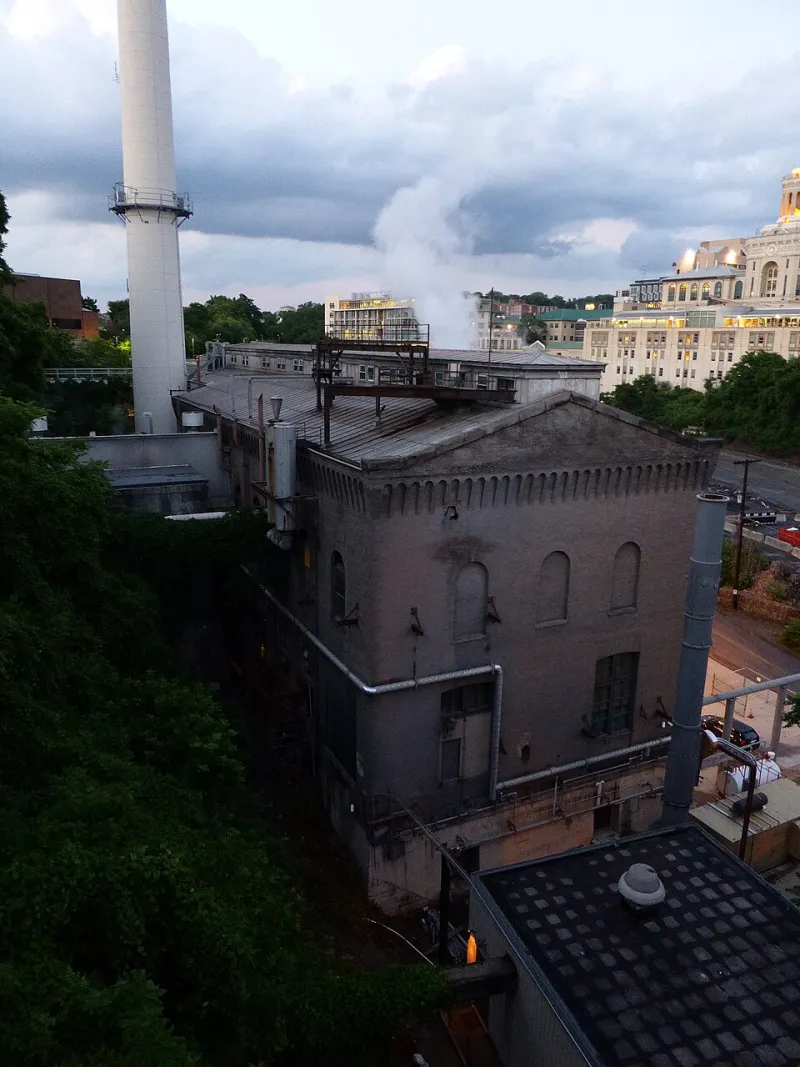
Photo: Kidfly182, CC BY 4.0, via Wikimedia Commons
Every experienced commercial buyer knows the ritual: the architect inspects the façade, the solicitor reviews the title, the agent highlights the yield. Somewhere in the basement, meanwhile, sits a 25-year-old air handling unit with a maintenance history nobody has asked to see.
The imbalance is curious. Mechanical and electrical services routinely account for 25 to 35 per cent of a commercial building's capital value, and a far greater share of its running costs. Yet in the majority of transactions we're invited into — usually after completion, when the defects have already surfaced — the plant room received barely fifteen minutes of attention during due diligence.
That is changing. Rising energy costs, tightening MEES obligations and the growing sophistication of corporate occupiers have pushed mechanical condition up the deal-risk agenda. The buyers getting this right are treating the basement tour as seriously as the boardroom presentation.
What the Numbers Say Before You Step Inside
A competent mechanical due diligence exercise starts on paper. Ask for the asset register, the statutory maintenance records and the last three years of service reports. Gaps matter as much as content: a building with no record of LGSR (gas safety) documentation, missing LOLER inspections for lifting equipment, or an unexplained two-year hole in the AHU service history is telling you something about its management culture.
Cross-reference the maintenance records against the EPC and any DEC. A building rated C on paper but carrying end-of-life chillers and an original 1990s boiler plant has a retrofit liability that the current rating conceals. With the government consulting on tighter minimum standards for commercially let stock, that gap between performance and compliance is now a priced risk, not a theoretical one.
The Walkthrough: What to Look At, and What to Ask
When you do tour the plant, resist the temptation to be impressed by cleanliness. Fresh paint on pipework tells you nothing; a well-organised logbook tells you a great deal. We suggest the following sequence:
Boiler and heating plant. Note the manufacturer's plate and installation date. Ask when the last strip-down service was completed and whether flue gas readings are recorded. A bank of boilers all installed in the same year means a single capital event is looming — find out which year.
Cooling and ventilation. Check the age and refrigerant type of any chiller or DX system. R404A and R22 equipment carries regulatory and cost exposure that will land on your balance sheet. On AHUs, look at the condition of the coil block, the condition of the casing (corrosion at the base is common in older roof plant) and whether access panels actually open.
Controls and BMS. This is where buildings hide their inefficiency. Ask who controls the BMS, whether the strategy has been re-commissioned in the last five years, and whether the schedules match the actual occupancy. A controls system nobody understands is a heating system running 24/7.
Access and safety. Can a technician work on every valve, actuator and fan without a permit and a prayer? Inaccessible plant gets deferred maintenance, and deferred maintenance compounds. Permits-to-work held in a thick folder often signal chronic access problems.
Water systems. Request the current Legionella risk assessment and the temperature log records. This is a statutory duty with personal liability attached; a thin file here should concern you more than any rusted pipe.
Pricing the Lifecycle, Not the Purchase
The final step is translating condition into numbers. A competent M&E surveyor will produce a lifecycle cost plan: what needs replacing in years one to five, what can wait a decade, and what the annual running cost differential is against a modern equivalent. On a 5,000 square metre office, the difference between a well-maintained plant regime and a neglected one can easily represent £40,000 to £80,000 per annum in energy and reactive costs alone.
That figure belongs in your financial model before exchange — as a price adjustment, a holdback, or simply a negotiating position. We have seen deals re-traded six figures on the strength of a thorough mechanical survey, and we have seen buyers discover the same defects six months after completion with no recourse whatsoever.
A Concluding Thought
The boardroom sells you the building's potential. The plant room tells you its truth. Buyers who schedule the basement visit before the negotiation, who demand the maintenance file with the same vigour they demand the title deeds, and who price mechanical liability into their bid are simply doing what every good investor does: understanding what they are actually buying.
If the vendor's agent is reluctant to arrange plant access or produce service histories, treat that reluctance as data. Buildings with nothing to hide rarely hide anything.