Your First Hour in the Empty Unit: A Torchlight Inspection Before the Keys Change Hands

Photo: inspector with torchlight examining empty commercial building interior, via tbrservices.com.au
There is a moment in every commercial occupation that no survey report quite captures: the first hour you stand alone in the unit, before furniture, contractors and well-meaning advice fill the space. We would argue that hour is worth more than any document in the legal pack. Surveys are written from ladders and clipboards; your first walk is written from the perspective of the person who will actually have to live with the building.
This is not a suggestion to bypass professional due diligence — a proper pre-acquisition survey is indispensable. But we have spent enough years in plant rooms and risers to know that the occupier's own inspection catches things that fall between the gaps of a commissioning certificate and a schedule of condition. Here is how we would spend that first hour.
Bring Three Things: A Torch, a Phone and a Thermos
The torch is not a gimmick. Plant rooms, riser cupboards and roof-level plant are routinely unlit or lit by the one fitting that stopped working in 2019. A decent LED torch lets you see what the building is actually hiding. The phone is for photographs — timestamped, wide-angle, unglamorous. If a dispute emerges in eighteen months about a hairline crack or a stained ceiling tile, your photographs from day one are the evidence that settles it. The thermos is because you will want to run the hot tap, and that is where we shall start.
The Tap Test Nobody Argues With
Turn on the hot water at the kitchenette or washroom tap and give it a full two minutes. You are waiting to see whether the water genuinely runs hot — and how long it takes to get there. Under HSE guidance on legionella control, stored and circulated hot water in a commercial building should reach 60°C at the calorifier and deliver at 50°C at the outlet within a reasonable time. If it takes five minutes of wasteful running to get warm, the pipework runs are long, the insulation may be patchy, or the circulation pump has been quietly switched off by someone solving a different problem.
While the tap runs, listen. A banging or knocking in the wall cavity suggests poorly clipped pipework or a water hammer issue that will only worsen. Fill a glass and look at it. Discoloured water in an empty unit is not always sinister — stagnation during vacancy is common — but it is worth photographing and raising in writing.
Find the Risers Before the Fit-Out Does
Every multi-storey commercial building has vertical risers carrying water, drainage, ventilation and electrical services between floors. In our experience, they are the most contested square metres in any lease negotiation. Open every riser cupboard on your walk and ask three questions:
- Is it accessible? If the cupboard is painted shut, blocked by a former tenant's partition, or reachable only by dismantling a kitchen, flag it immediately. You have a right of access; the building may not be honouring it.
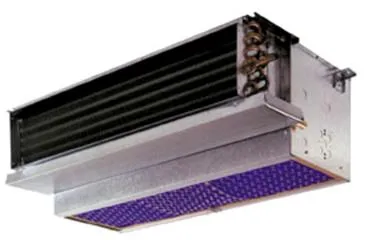
- Is it yours? Fan coil units and terminal services within your demise may be your maintenance responsibility under the lease. Establish now which units sit inside your lines — it is far easier before the fit-out conceals them above ceilings.
- Is it intact? Look for evidence of past leaks — tide marks on the concrete, corrosion at pipe joints, replacement sections of newer pipework suggesting a repaired failure. Riser leaks travel downward and the tenant on the floor below the failure rarely enjoys the experience.
The Question That Outranks Everything: Who Holds the BMS Login?
If the building has a building management system — and most commercial units above a certain size do — the single most valuable piece of information you can leave your first hour with is this: who actually controls it?
Too many occupiers discover, three months in, that the BMS is locked behind the credentials of a controls specialist the landlord last used in 2018, or that the head-end sits in a landlord's office two floors away with no agreed protocol for access. Without BMS access you cannot see your own heating schedules, verify your own energy consumption, or diagnose why the fourth floor is cold every February. Ask early. Ask in writing. If a change of controls provider is needed, budget for it before the fit-out, not after.
Smell, Listen and Look Up
Your senses are better diagnostic tools than you think. A musty odour in a closed-up unit suggests chronic condensation or a leak history. A faintly sweet, chemical smell near the plant room can indicate refrigerant. Standing quietly in the empty space, you will hear what no occupied building ever reveals — the hum of a recirculation pump running against a closed valve, the drip-drip of a cistern refilling somewhere overhead.
And look up. Ceiling voids tell the truth. Water staining on tiles, compressed insulation, and access panels that have clearly been forced open repeatedly all point to a maintenance history worth discussing before you sign anything you cannot amend.
Write It Down, Send It On
The output of your hour should be a short written schedule — photographs, observations, questions — sent to your solicitor, your fit-out contractor and, where relevant, the landlord's managing agent. This is not adversarial; it is simply good project management. Items raised before occupation become agreed rectifications or documented conditions. Items raised after occupation become disputes.
We have walked enough buildings to know that the ones that go wrong rarely fail on the headline items. They fail on the riser nobody could open, the login nobody held, and the tap nobody ran. Spend your first hour finding those things, and you will spend the next decade glad you did.