Four Landlords, One Boiler: The Quiet Chaos of Shared Plant in Multi-Let Buildings
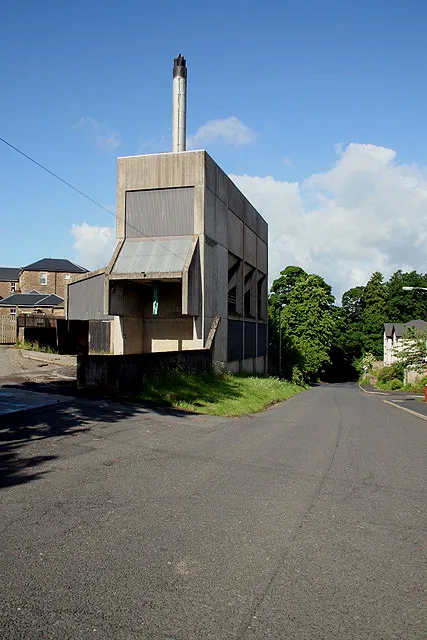
Photo: Walter Baxter, CC BY-SA 2.0, via Wikimedia Commons
There is a particular kind of phone call we dread. It usually arrives in November, from a tenant on the second floor of a multi-let office building somewhere between Reading and Rochdale. The heating has failed. Again. And the question that follows is always the same: who exactly is going to pay for this?
In a single-let building, the answer is straightforward. In a multi-let building with shared plant — one boiler plant serving four landlords' demise, one ventilation system threading through three tenancies, one cold-water storage tank feeding everyone — the answer is frequently nobody. And a building where maintenance is nobody's job is a building quietly falling apart.
The Anatomy of an Orphaned Plant Room
Shared services arrangements tend to evolve rather than being designed. A landlord sells half a floor; a lease is assigned; a mezzanine becomes a separate demise. Each transaction makes commercial sense in isolation. Collectively, they leave behind a plant room serving equipment that appears on nobody's asset register.
We recently surveyed a 1980s business park where the heating for one pavilion was fed from a plant room located in a building owned by a different party entirely. The pipes crossed two titles and a public highway. When the pressurisation unit failed, three sets of solicitors spent six weeks establishing who was liable while the tenants bought electric heaters. The eventual repair bill — inflated by the delay and the resultant frozen coil — could have funded five years of planned maintenance.
What Nobody Signing Actually Costs
The consequences of unclear ownership are rarely dramatic at first. They accumulate.
Reactive maintenance at premium rates. Without a contracted provider, each party calls out whichever engineer answers fastest. Nobody holds service history, nobody knows what was done last time, and every visit starts from scratch.
Statutory compliance falling between stools. Legionella testing, gas safety checks, F-Gas inspections — these obligations do not pause while ownership is debated. In our experience, shared water systems in multi-let buildings are the most common place we find lapsed monitoring records. That is not a paperwork problem; it is a health risk and, following any incident, a prosecution risk.
Service charge disputes that poison relationships. Tenants who cannot see what they are paying for withhold charges. Landlords, facing recovery shortfalls, defer works. The plant deteriorates further, and the cycle compounds.
Insurance complications. Insurers increasingly ask for evidence of planned maintenance regimes. "We think the other party's contractor looks after it" is not an answer that holds up at claims stage.
The Case for a Tri-Party Agreement
Our view is blunt: shared plant without a maintenance agreement is not a grey area, it is a defect in the building's management structure. The remedy is unglamorous but effective.
First, establish a named responsible party. Whether that is a head landlord, a management company, or an appointed managing agent, one entity must own the maintenance schedule and hold the compliance file. Responsibility shared by committee is responsibility avoided.
Second, map the services against the titles. A simple marked-up drawing — which plant serves which demise, where the pipework crosses boundaries — resolves ninety per cent of future arguments before they begin.
Third, execute a tri-party maintenance agreement. Landlords, tenants' representatives and the appointed contractor sign a single document specifying scope, access rights, cost apportionment and escalation routes. It is not expensive to produce. It is extraordinarily expensive to lack.
Fourth, publish the service charge breakdown. Tenants who can see the line item for boiler servicing rarely dispute it. Tenants who see a vague "buildings services" charge always do.
A Building That Works Because Someone Is Accountable
Multi-let buildings are a permanent feature of the UK commercial landscape, and shared services in them are often the most economical engineering solution available. The problem is never the sharing. It is the absence of a signature.
If you manage, own or occupy space in a building where the plant room's ownership is a matter of folklore rather than contract, resolve it this quarter. Get the drawings, get the parties in a room, and get an agreement signed before the first cold snap turns a governance gap into an emergency call-out.
We have stood in enough disputed plant rooms to know how this story ends when nobody acts. It ends with four landlords, one boiler, and no heating.