When the Sum of the Meters Doesn't Add Up: A Landlord's Guide to Sub-Meter Audits
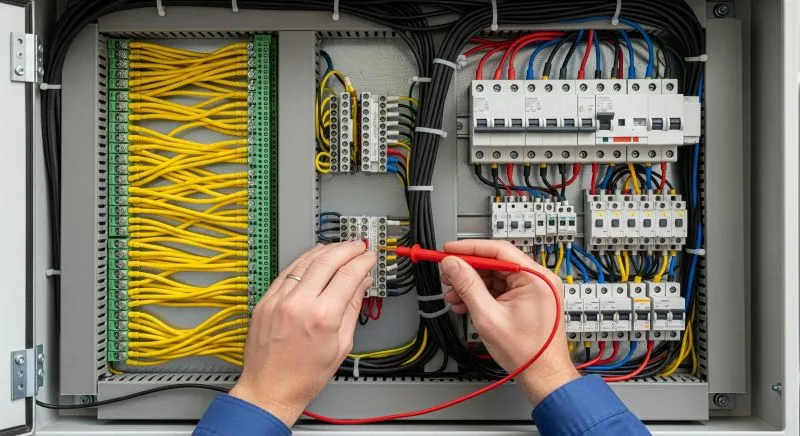
Photo: electrical sub meter panel commercial building, via repairbeepingsmokedetectors.com
In a multi-let building, the meter is more than a piece of equipment. It is the point where engineering, billing and tenant relations meet. The landlord buys energy or water in bulk, the sub-meters allocate consumption, and the managing agent turns those readings into invoices. When the numbers reconcile, nobody thinks about the meters. When they do not, the conversation becomes adversarial very quickly.
The received wisdom is that the meter does not lie. That is true in a narrow technical sense: a correctly specified, correctly installed and correctly commissioned meter will measure what passes through it within its accuracy class. The problem is that many sub-meters are none of those things by the time the first bill is issued. They may have the wrong multiplier, a crossed label, a pulse weight that was never configured or a data logger that has been estimating for months. The meter is not lying. The system around it is.
The reconciliation that starts the argument
A sensible audit begins with a simple comparison. Take the bulk meter reading for a defined period, add the known common-area and landlord supplies, and compare the total with the sum of the tenant sub-meters. Allow for standing losses and measurement tolerance, but do not allow an unexplained gap to become a permanent feature of the service charge.
The gap may be small and stable, which often points to unmetered common areas or a known distribution loss. It may be large and volatile, which suggests a configuration error, a faulty meter or a billing-engine problem. It may also be negative, with tenant meters adding up to more than the bulk supply. That is a useful warning sign, not a reason to celebrate. It usually means a multiplier is wrong or a meter is being read twice.
Where the errors hide
Meter identity is the first place to look. Serial numbers should match the asset register, the physical installation and the billing system. Labels fade, risers are reconfigured and units change use. A meter that was once serving a whole floor may now serve a single suite, while the billing engine still applies the old allocation. Physical verification is unglamorous but essential.
Commissioning is the second. Current transformers may have a ratio that differs from the one configured in the meter. Pulse outputs may be set to the wrong weight. Modbus registers may have been mapped incorrectly. The billing multiplier may be missing a zero or including one. These are not exotic failures; they are ordinary project handover defects that persist because nobody reconciles the first invoice against a site reading.
Billing logic is the third. Estimated reads, incorrect tariff periods, overlapping dates and daylight-saving adjustments can all create drift. So can vacant units, landlord supplies and shared services that are not separately metered. If the billing system treats a landlord supply as a tenant supply, or vice versa, the dispute will eventually surface. The audit should test the billing engine with known inputs, not just review the output.
A practical audit sequence
Start with the asset register and a single-line diagram. The register should list every meter, its location, serial number, accuracy class, multiplier, communication route and the load it serves. The diagram should show how the bulk supply, sub-meters and common-area supplies relate to each other. If those two documents do not exist, creating them is the first deliverable.
Next, verify a sample physically. Check the serial number, the CT ratio, the wiring, the pulse output and the display. Compare the site reading with the remote reading. Where the meter is connected to a BMS or billing platform, confirm that the data point maps to the correct meter and that the multiplier is applied once, not twice. This is where a project manager earns their fee: the work is part inspection, part configuration review and part detective exercise.
Then validate the data. Look for gaps, flat lines, impossible peaks and readings that repeat for long periods. Check time stamps and time zones. A meter that reports in UTC while the billing engine assumes local time can create small but persistent errors around clock changes. A data logger that estimates during communication outages can create larger ones. The audit should distinguish between measured data, estimated data and substituted data.
Finally, reconcile and report. A good exception report shows the size of the gap, the likely cause, the affected tenants and the proposed remedy. It should be written for both technical and non-technical readers, because the managing agent and the tenants will both need to understand it. Remedial action may include reconfiguration, replacement, re-billing or a credit. It should also include a change-control step so that the same error does not return at the next fit-out.
The opinion: metering is not a billing function
The most common mistake is to treat sub-metering as an administrative afterthought. It is designed and installed as part of the building services, but once the project is complete it is often handed to a billing team that has no visibility of the installation. The result is predictable. Meters drift out of configuration, labels become misleading and disputes accumulate.
Metering should be managed as infrastructure. That means commissioning records, asset registers, change control and periodic verification. It means involving the mechanical and electrical team when a unit is subdivided or a tenant fit-out changes the distribution. It also means giving tenants a clear explanation of how their charges are derived. Transparency does not eliminate every dispute, but it makes the reasonable ones easier to resolve.
In 2026, with energy costs still volatile and service charges under close scrutiny, the commercial case is strong. A modest audit can uncover overcharges, undercharges and unbilled common areas. It can also protect the landlord from a far more expensive argument later. The meter may not lie, but the system around it can. The purpose of the audit is to make sure the system tells the truth.
What to ask your managing agent
Ask for the metering asset register and the latest reconciliation. Ask which meters are remotely read, which are manual and which are estimated. Ask how multipliers and CT ratios are configured and when they were last verified. Ask what happens when a tenant disputes a bill and how the evidence is assembled. If the answers are vague, the audit is overdue.
The building does not need perfect metering to be well managed. It needs metering that is understood, maintained and reconciled. That is a project management discipline as much as an engineering one, and it deserves the same attention as the plant it serves.