The Alarm That Cried Wolf: Rethinking BMS Alarms Before the Next Genuine Failure
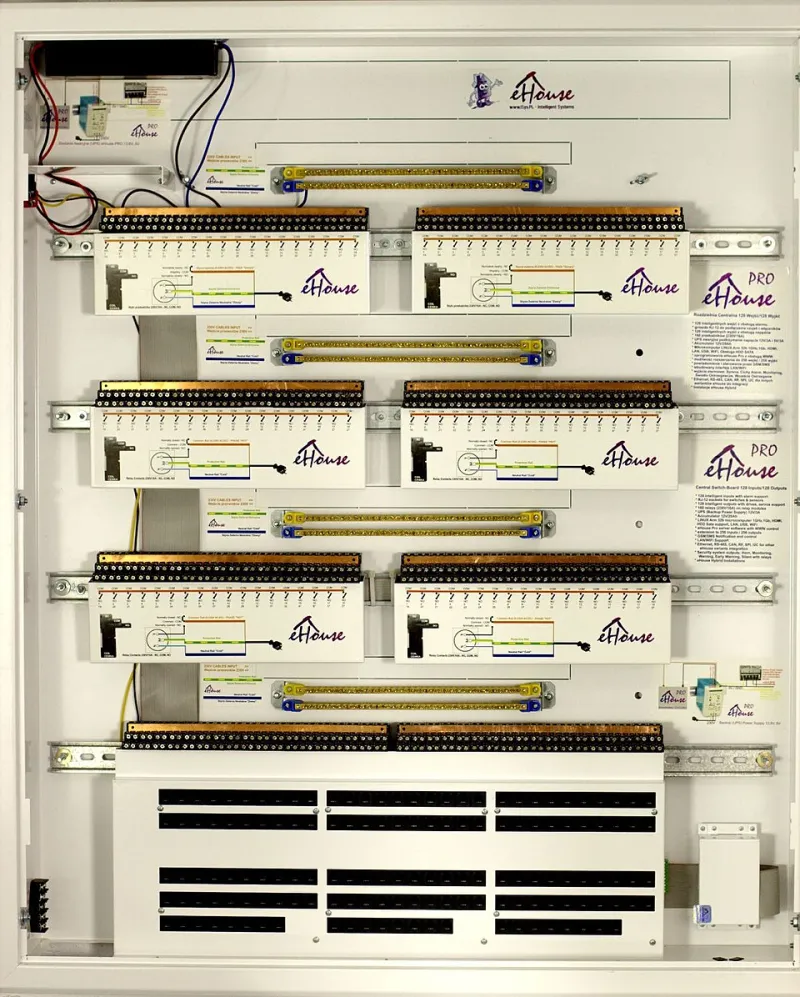
Photo: iSys.PL, Attribution, via Wikimedia Commons
At 03:12 on a Tuesday, the building management system in a Midlands office block logged its two hundred and fourteenth unacknowledged alarm of the week. Forty-one of them concerned a frost thermostat on a plant room wall that had been faulty since the previous winter. The remainder were a mixture of filter differential pressure warnings, transient communication faults and a recurring high-level alert from a water tank decommissioned two years earlier.
Nobody was watching. That is not a criticism of the night shift. It is the predictable result of a system that has been allowed to cry wolf for so long that its voice has become background noise.
Alarm fatigue is a design failure, not a staff failure
Facilities teams are frequently criticised for missing alarms. The more useful question is why the system was configured to make missing them rational. Most of the floods we encounter share the same origins: a set of commissioning defaults that was never reviewed, points added piecemeal by successive contractors, deadbands narrow enough to trigger on normal plant cycling, and no named owner of the alarm philosophy once the O&M manual was handed over.
Industry guidance is not shy on the subject. EEMUA 191, and its counterpart ISA 18.2, points to a steady-state rate in the region of one alarm every ten minutes, with a defined cap during upset conditions. A substantial share of UK commercial buildings run at ten to thirty times that rate. At those volumes prioritisation collapses. When everything is urgent, nothing is.
The three ways a flood conceals a real fault
Standing alarms. A point that has been active for weeks sits permanently at the top of the list. Operators learn to scroll past the first screen without reading it, and a genuine new alert arriving in the same block is lost.
Chattering. A sensor oscillating around its setpoint can generate hundreds of events in an afternoon without telling anyone whether the plant is working. The event log fills, the trend is obscured, and the underlying calibration fault survives another quarter.
Generic messages. A single summary point labelled plant fault, wired to half a dozen unrelated items, carries no diagnostic value. Without first-out logic, the engineer arrives to find a reset has cleared the evidence.
Priority inflation. When most alarms are configured as high priority, priority stops being a filter and becomes decoration. The one chiller failure that mattered looks exactly like the filter warning beside it.
An audit you can run without buying anything
You do not need a new platform to find out whether your alarm strategy is working. You need a spreadsheet and an hour with the BMS front end.
- Export thirty days of the alarm and event log as a CSV file.
- Rank the tags by the number of events. In most buildings, the top twenty tags account for the majority of everything logged.
- Classify each of those twenty as standing, chattering, duplicate, obsolete or genuine. The proportions will be uncomfortable.
- Plot events by hour of day. A spike at plant start-up is normal; a permanent plateau across the night is not.
- Count alarms by priority. If the high-priority band exceeds roughly a tenth of the total, the configuration needs review before the plant does.
- Take three of the worst offenders and follow them back to the field device. Half the time the answer is a sensor, a setpoint or a wiring fault rather than software.
- Check whether any maintenance overrides are still active. The ones with no expiry date are the ones that matter.
That exercise produces a defensible list of perhaps five changes. Fixing those five will do more for fault detection than any dashboard upgrade.
What rationalisation looks like in practice
Rationalisation is a dull word for a set of straightforward engineering decisions. A deadband wide enough to accommodate normal plant cycling. An on-delay of sixty seconds on pressure and flow switches so that a valve stroke does not register as a fault. Hysteresis on temperature points. Grouping of related alerts so that one plant item generates one message rather than nine. First-out logic so the initiating cause is recorded before the consequential trips follow. Maintenance overrides that expire automatically, forcing someone to sign them back in.
None of this requires new hardware. It requires an afternoon, a plant schedule and the discipline to document what was changed and why.
Why landlords should care
The commercial case is rarely made explicitly, but it is straightforward. Every nuisance alarm consumes attention that would otherwise go to a genuine defect. A chiller fault spotted on the Monday is a service call; the same fault found three weeks later, after a compressor has run short-cycling in the interim, is a replacement. For multi-let buildings, the cost lands in the service charge and the argument lands with the tenants.
There is an assurance dimension too. Under the Building Safety Act 2022, higher-risk buildings must maintain a golden thread of information. A BMS event log that is 90 per cent noise is not a record of anything. Insurers, increasingly, ask for evidence of planned maintenance and fault response; an audit trail that cannot distinguish a real trip from a sensor glitch weakens the claim when it matters.
A modest proposal
Pull the export this month. Identify the twenty worst tags. Fix five. Review the log again in a quarter and measure the change. If the building is still generating two hundred events a week, the problem is not the software and it is not the night shift. It is an alarm philosophy that nobody has owned since handover, and it is costing more than the breakdown it is hiding.