One Hour a Month or £180,000 by Spring: The Quiet Arithmetic of Deferred Maintenance
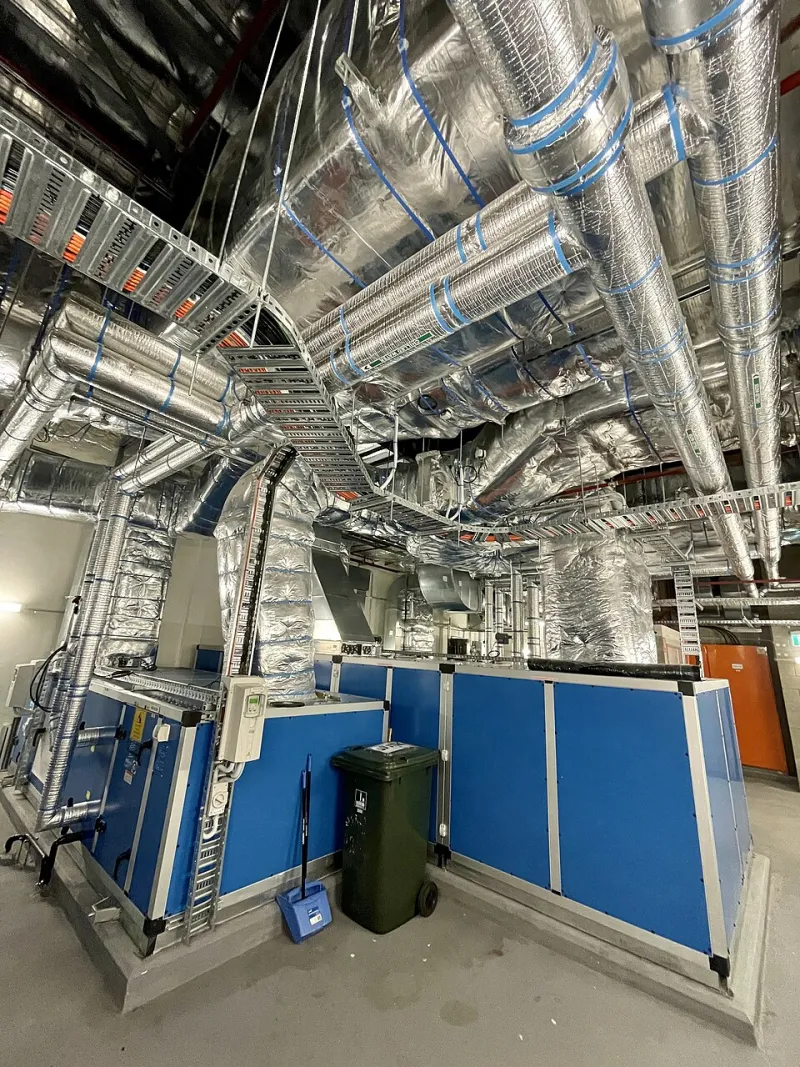
Photo: Kgbo, CC BY-SA 4.0, via Wikimedia Commons
Nobody budgets for a filter change in the capital plan. It sits in the revenue column, somewhere between washroom consumables and the window cleaning contract — a small, unglamorous line item that attracts attention only when the invoice looks wrong. And yet the path from a £40 filter to a six-figure plant replacement is shorter and better documented than most facilities managers assume.
We recently surveyed an air handling unit serving a three-storey commercial unit on a Thames Valley business park. What the inspection revealed was not a failure in any dramatic sense. It was an accumulation — four years of small deferrals, each individually defensible, each quietly narrowing the options available to the client.
Year One: The Month That Became a Quarter
The service history shows the first deviation in autumn 2021. The quarterly filter change slipped to five months. There was a reason — a contractor changeover, access difficulties, the usual friction of a live building. The delay itself cost nothing measurable. Differential pressure across the filter bank crept up, fan power consumption rose by a few percentage points, and nobody noticed because nobody was trending the data.
This is the stage at which every deferred maintenance story begins: not with a decision, but with a reschedule. The job doesn't get cancelled. It gets moved — and the building absorbs the difference invisibly.
Year Two: The Strainer Nobody Opened
By the following spring, the coils were the issue. Filters that overrun their duty shed their efficiency gradually, then let progressively coarser particulate through. The cooling coil — a finned surface designed to move air, not dust — began to blanket. Heat exchange efficiency dropped. The building management system compensated by extending run hours, which the occupiers experienced not as a problem but as a slightly warmer third floor in July.
Elsewhere in the same unit, the chilled water strainer had not been opened since commissioning. A strainer clean is a thirty-minute job with a bucket and a torch. Left alone, the pressure differential across it climbs, flow reduces, and the coil it protects starts doing less with more. The two problems compounded: a coil losing effectiveness and a circuit struggling to feed it.
Year Three: The Escalation Point
Here is where the timeline matters for anyone managing similar plant. The escalation point was not the moment the unit failed. It arrived roughly eighteen months earlier, when corrosion set in on the coil faces and the fan bearings — running harder against a fouled system for two years — passed the point where lubrication and adjustment could restore anything.
From that point, every subsequent intervention was managing decline rather than restoring performance. Quotes for coil replacement were obtained. One came back at just under £19,000, with the caveat that the unit's general condition made the spend hard to justify against remaining service life. The client, reasonably, hesitated. The unit limped on.
Year Four: The Capital Decision
By this winter, the calculation had changed. Refrigerant regulations, parts availability for an end-of-life unit, rising energy consumption — the annual running cost premium alone was estimated at £6,000–£8,000 against a maintained equivalent. Full replacement of the AHU, including builders' work, access and commissioning, was quoted at £180,000. The decision that had been deferred one month at a time for four years had arrived anyway, at the worst possible price and with no leverage.
What the One-Hour List Would Have Cost
Reconstructing the timeline, the total annual burden of the tasks that were skipped is modest: filter changes on schedule, a strainer clean twice a year, coil inspection and cleaning annually, bearing checks at each service. Roughly an hour a month of planned labour, perhaps £1,200 a year in consumables at current prices.
Over the four years, that is under £6,000 — against a £180,000 replacement and four years of elevated energy bills. Even allowing generously for the possibility that the unit would have reached end of life regardless, the maintained unit would have given its owner the one thing the neglected one never did: a choice about timing.
Reading Your Own Timeline
Three practical takeaways for facilities managers reviewing plant this quarter:
- Trend differential pressure, not just filter dates. A rising pressure reading across filters or strainers is the earliest honest signal that a small job is being missed.
- Ask what slipped, not what was done. Service reports record completion. Escalation lives in the reschedules.
- Price the hour, not the failure. When a task is deferred, log its estimated cost. It makes the arithmetic of the next deferral harder to ignore.
Deferred maintenance rarely announces itself. It accrues — quietly, monthly, compoundingly — until the day the revenue problem becomes a capital one. The filter was never the point. The point was everything the filter was protecting.