What the Duct Above the Fryer Knows: A Compliance Post-Mortem No Insurance Assessor Wants to Write
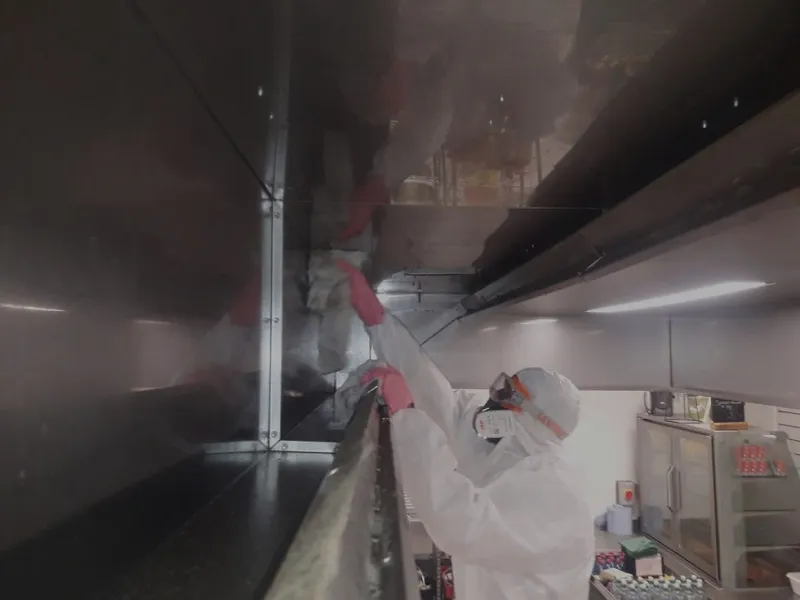
Photo: commercial kitchen extraction ductwork canopy cleaning, via static.wixstatic.com
There is a particular species of asset that every commercial landlord, managing agent and tenant knows exists and almost nobody takes responsibility for. It runs above the ceiling tiles, through the riser, and out onto the roof. It is coated — sometimes generously — with a substance that is technically classified as a fuel. And in most buildings, it is cleaned when somebody remembers, inspected when somebody complains, and documented almost never.
We are talking, of course, about the kitchen extract ductwork. And if you think that is a niche concern confined to restaurants, consider how many mixed-use buildings, leisure schemes, staff canteens and food halls you own or manage. Then consider what happens when the duct catches fire.
The Post-Mortem: One Group, Three Sites, One Very Expensive Lesson
Earlier this year, a mid-sized restaurant group operating three sites across the South East — the details of which we have agreed to anonymise — learned the hard way what the inside of a duct looks like under forensic examination.
A fire broke out in the early hours at their Reading site. Nobody was hurt; the premises were empty. The blaze itself was contained to the kitchen and extraction system. On paper, a good outcome. In practice, the following twelve months were ruinous.
The fire investigation traced ignition to a build-up of grease deposits within the extract canopy and the first three metres of horizontal ductwork. That much was expected. What followed was not.
The group's insurer declined the claim. The policy, like most commercial policies in the UK market, carried a condition requiring the insured to maintain the premises in good repair and to comply with relevant standards. The investigation report noted deposits that exceeded the tolerances set out in BESA's TR/19 specification — the industry benchmark for grease hygiene in ventilation systems — at the point of ignition and beyond. Photographs of a duct access panel, sealed shut with a decade of paint, did not help.
The loss adjuster's letter made uncomfortable reading. Not only was the fire damage claim refused; the insurer reserved its position on liability arising from smoke migration to adjoining units in the terrace. The group's landlord, whose building insurance sat adjacent to the tenant's liability exposure, engaged solicitors. Two of the three sites lost their insurance cover at renewal. The third received terms at roughly triple the previous premium.
The direct fire damage ran to a five-figure sum. The claim refusal, the smoke damage exposure, the interim trading losses and the remedial ductwork replacement across all three sites ran to considerably more than a quarter of a million pounds.
What TR/19 Actually Requires — And What "Cleaned Regularly" Doesn't Cover
TR/19, published by the Building Engineering Services Association, is not a law. It is something arguably more powerful in practice: the standard your insurer will point to when it needs a reason. It sets out grease depth tolerances — typically measured in microns — and, crucially, a cleaning frequency matrix driven by how heavily the kitchen is used.
In broad terms:
- Heavy use (12–16 hours daily): ductwork inspection and cleaning at three-month intervals
- Moderate use (6–12 hours daily): six-month intervals
- Light use: twelve-month intervals at most
The frequencies are the floor, not the ceiling. A kitchen frying at volume will generate deposits faster than the matrix suggests. And the matrix means nothing if the ductwork cannot be inspected — which brings us to the single most common failure we encounter on site.
The Access Panel Problem
TR/19 is explicit that ductwork must have adequate access panels to permit cleaning and inspection along its full length. In a substantial proportion of the buildings we survey, the ductwork simply cannot be cleaned to standard because nobody can physically reach it. Access panels were omitted at fit-out. Ceilings were sealed. Duct runs were boxed in behind decorative finishes during a refurbishment that nobody with a mechanical background signed off.
The result is a system that can only be cleaned at the canopy and the discharge point — the visible ten per cent — while the intervening runs accumulate deposits in the dark. A cleaning certificate that covers the accessible sections and ignores the rest is not a compliance document. It is, in the eyes of an assessor, evidence of a system that was never compliant in the first place.
If you are a landlord reading this: your next fit-out approval is where this gets fixed. Specify access panels at no more than the intervals TR/19 recommends, and make ductwork cleanability a condition of tenant alterations.
Splitting the Responsibility Without Splitting the Risk
The perennial difficulty in leased premises is the interface. The tenant operates the kitchen and holds the cleaning contract. The landlord owns the ductwork — or part of it, where the system serves multiple units or terminates on shared plant space. The lease is often silent, or ambiguous, or refers to a schedule that nobody has read since the 1990s.
The regime that works, in our experience, is one agreed before the incident, in writing, with both parties named:
- A single named responsible party per duct run — even where cost is shared, accountability should not be.
- A cleaning schedule set by measured use, not lease habit, reviewed annually and adjusted when the tenant changes menu or trading hours.
- Post-clean reporting that includes photographic evidence of every section cleaned, deposit measurements, and a schedule of any sections not accessible — with a remedial plan and date.
- A single repository for certificates, accessible to both landlord and tenant, because the document you cannot find on the day of the inspection is the document that doesn't exist.
- An annual joint inspection — brief, documented, and attended by someone who can read a duct layout drawing.
None of this is expensive. A compliant cleaning regime for a typical restaurant kitchen runs to a few thousand pounds a year. Set against a declined claim, a void trading period and a solicitor's letter from your landlord, the arithmetic is not close.
The Question to Ask Before the Assessor Does
If you manage a building with a kitchen — any kitchen — ask one question this week: if a fire investigator opened our ductwork tomorrow, what would they find, and could we prove we didn't know?
If the honest answer involves an access panel that hasn't been opened since the fit-out, you are not managing a maintenance schedule. You are managing a countdown. The duct above the fryer keeps its own records, in grease, and it will produce them when asked.