Selling the Silent Floor: When Mechanical Credentials Become the Letting Brochure's Opening Chapter

Photo: Diliff, CC BY-SA 3.0, via Wikimedia Commons
There was a time when a commercial letting brochure said everything it needed to say in three photographs and a floor plan. Reception shot, glazed elevation, net internal area. The building services — if they appeared at all — were relegated to a line about 'comfort cooling' and a footnote on parking.
That document has changed. Walk through the particulars of any serious office or industrial listing in 2025 and you will find EPC ratings printed in the same typeface as the rent, references to heat pump readiness, and — in a growing number of cases — actual measured air quality data from the occupied floors. In a soft letting market, agents have discovered that the mechanical services are no longer the plumbing of the pitch. They are the pitch.
The Occupier Did the Homework
The shift is not coming from landlords. It is coming from the people sitting across the table.
Corporate occupiers with their own net zero commitments cannot lease a building that wrecks their carbon reporting. Their ESG teams ask for the EPC certificate before the second viewing. Their facilities directors ask whether the heating system is a wet system served by gas, and if so, what the decommissioning plan looks like. Procurement departments in the public sector now routinely request air quality monitoring data as part of space standards.
An agent who cannot answer those questions loses the listing conversation to one who can. Hence the new brochure: the services credentials have been promoted because the buyer demands them, not because the landlord had a change of heart.
What Actually Sells
Having sat on the contractor's side of enough pre-let discussions, the pattern is fairly consistent. Four things now do genuine work in a letting:
- The EPC rating, honestly presented. A C with a clear pathway to B is worth more than a paper C with no evidence behind it. Occupiers' advisers check.
- Heat pump readiness. Not necessarily installed — readiness. Sizable risers, electrical capacity, plant space, a written assessment. It signals the landlord has thought past 2030.
- Ventilation you can evidence. Post-pandemic, fresh air rates and CO₂ monitoring moved from invisible to measurable. A floor that can show 15 litres per second per person has an argument a carpet sample cannot match.
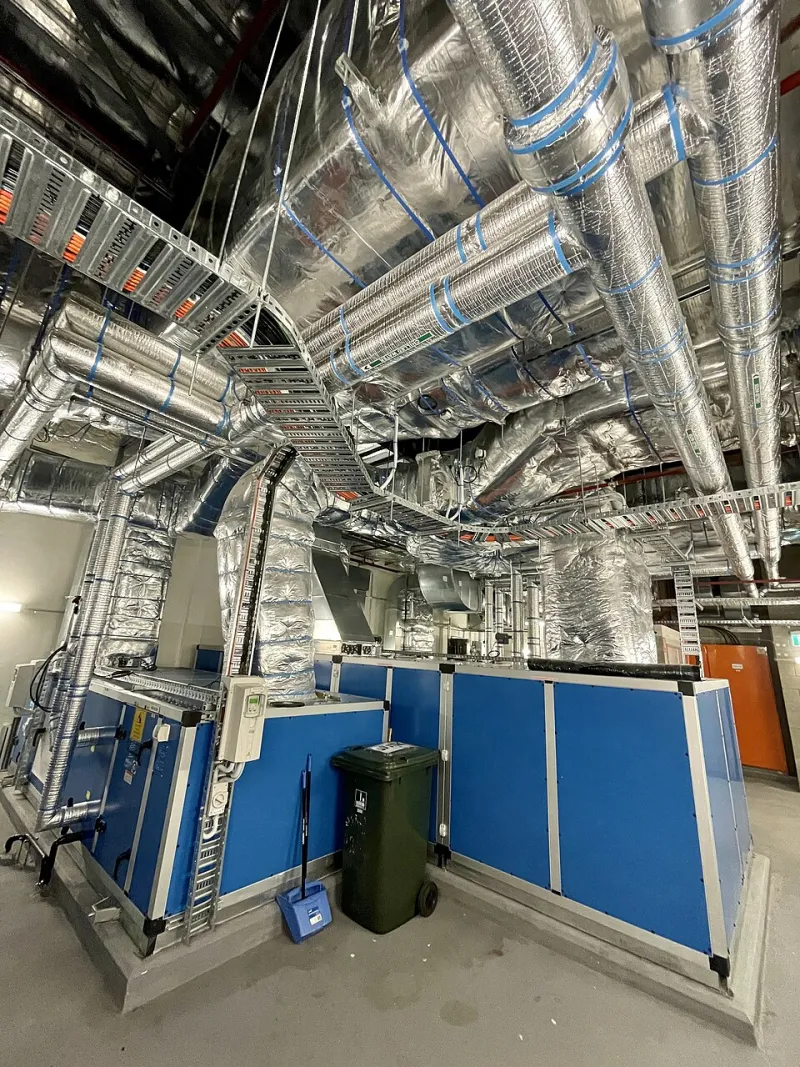
- A plant room worth photographing. The agents doing this well now include plant room imagery in the brochure. Clean, labelled, maintained, logged. It reads as competence, because it is.
The Investment Question
This is where landlords face an uncomfortable recalibration. If the plant room is part of the product, then deferring a chiller replacement is no longer a maintenance decision — it is a marketing one.
The arithmetic is straightforward. A visible investment in heating decarbonisation, ventilation upgrade and monitoring infrastructure might run to tens of pounds per square foot. The rental and rent-free-period differential between a building with credible services credentials and one without, in the current market, frequently exceeds that over a lease term. Add the MEES compliance angle — an EPC that cannot legally be let from 2030 is worth precisely nothing — and the case stops being environmental and becomes entirely commercial.
The trap is the cosmetic spend. A resprayed plant room with a fifteen-year-old boiler behind it will be seen through in one technical due diligence meeting. Occupiers' representatives now carry the same checklists our own engineers do. The credentials have to be real, documented, and backed by a maintenance history you would be content to hand over.
Start With an Audit, Not a Brochure
The practical first step for any landlord preparing a building for market is unglamorous: a full mechanical condition and compliance audit, written for an external audience. What is the true EPC position? What is the realistic pathway to heat pump conversion, with costs? Where are the single points of failure? What does the maintenance record actually show?
From that document, the investment sequence writes itself — and so does the brochure. The buildings that are letting well in a difficult market are not the ones with the glossiest render. They are the ones where the landlord can open the plant room door during a viewing and let the evidence speak.
The services have moved front of house. The landlords who treat them as an asset to be invested in, rather than a cost to be contained, will be the ones whose particulars get a second reading.